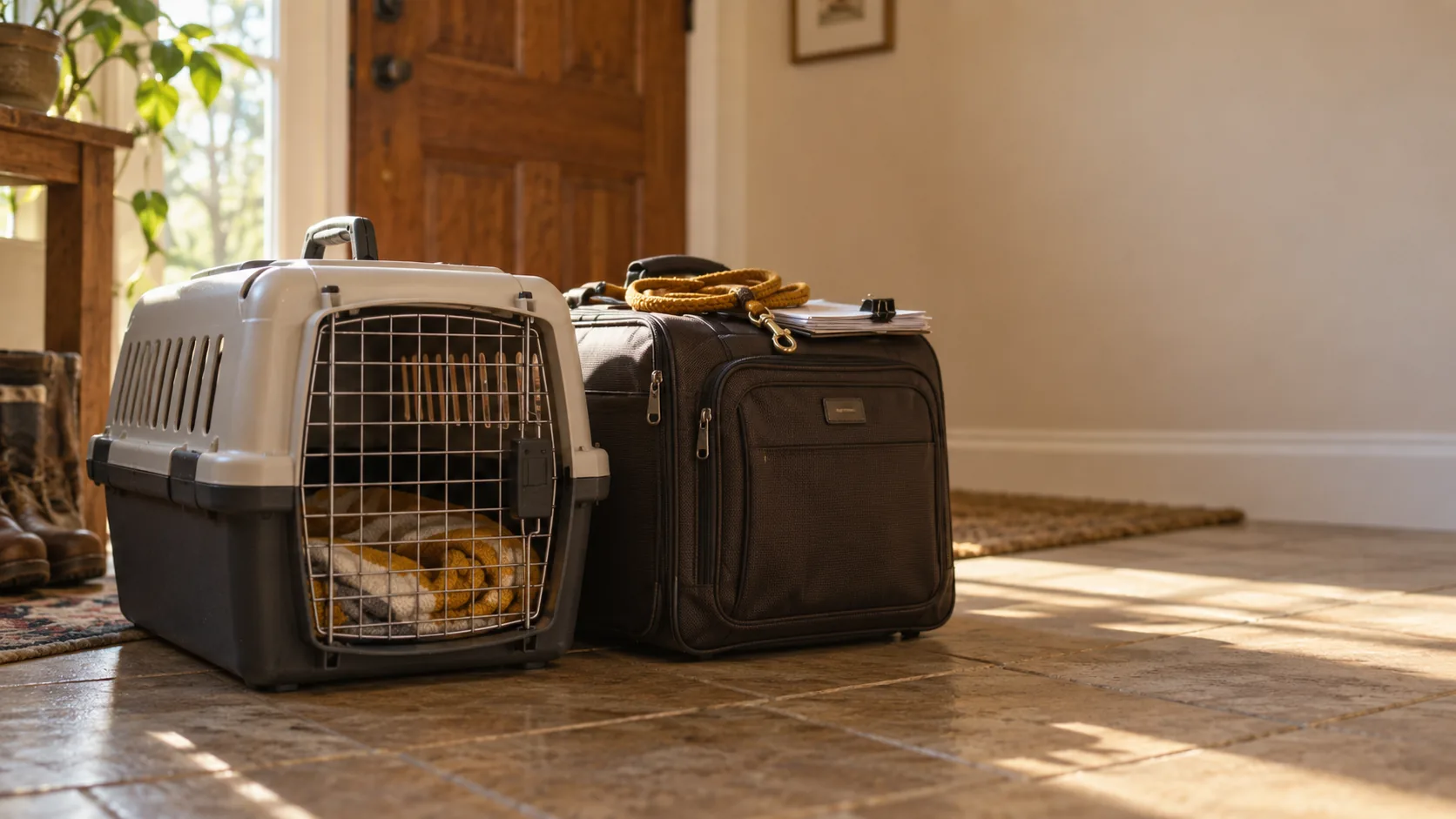
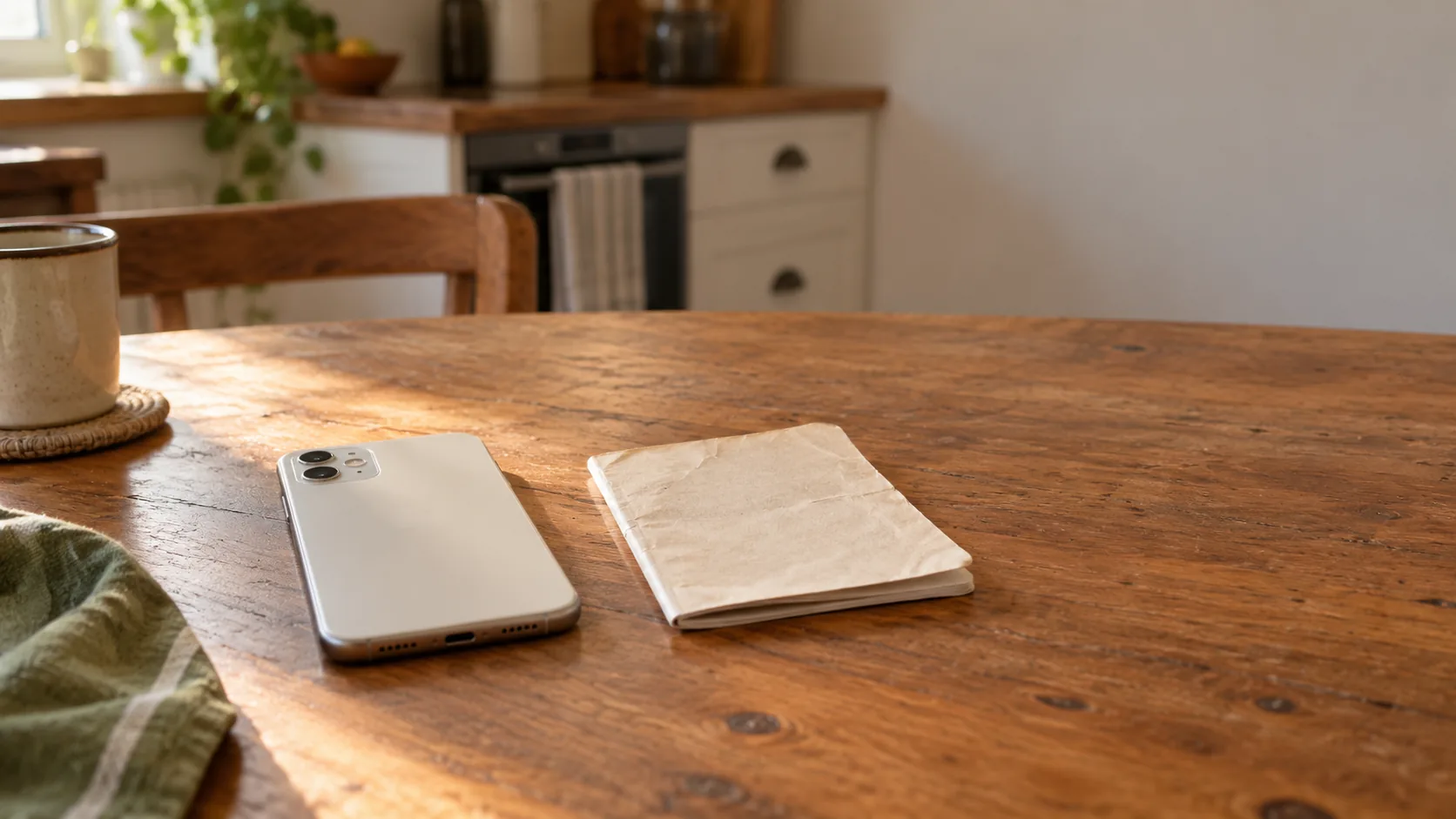
Where this breaks is almost always at the counter.
Someone turns up with the carrier they already owned, or the card on their phone,
or a dog two centimetres taller than the airline they picked allows. And at that
point there's no negotiating: the flight leaves anyway, without the dog.
Nearly all of it is avoided with one afternoon of preparation. This is that
afternoon.
First: who sets the rules
There's a confusion here that costs people a lot of time. On a flight within
Mexico, the one asking for paperwork is the airline, not the government.
The SENASICA procedure — the one that comes up first whenever you search this
— applies to entering or leaving the country with an animal. To fly from one
Mexican city to another, what governs is the policy of the airline you booked.
That has an important practical consequence: the rules differ between airlines,
and they change over time. There is no such thing as "the requirement for
flying with a dog in Mexico". There's the requirement of the airline you're
flying, in the week you're flying.
The five things every airline decides
Every policy, without exception, is organised the same way. If you know what to
ask, you can read any of them in three minutes:
1. Cabin or hold. Some allow both, and the line between them is the combined
weight of the animal plus its carrier. It's the first question, because it
changes everything else.
2. Carrier dimensions and weight. The number that surprises most people. It's
measured with the carrier closed, and the weight is almost always combined —
animal plus box — not the animal alone.
3. How many pets per passenger. Usually one in cabin. If it's two people and
two dogs, that changes how you book.
4. What paperwork they ask for. The card, the airline's own forms, and
sometimes a vet's certificate. Note carefully: these are the airline's
documentary requirements, not a care schedule. What your pet needs and when is
decided by your vet.
5. The restrictions. Minimum age, pregnant females, recent surgery, excluded
breeds, and specific warnings for short-muzzled dogs. This is the section nobody
reads and the one that ruins the most flights.
One fully worked example: Volaris
So the five questions aren't abstract, here's what they look like answered by a
real airline. This is what Volaris publishes on its official site — link at
the bottom — and it's a reference for shape, not a universal rule:
- Dogs and cats only.
- In cabin: carrier no more than 44 cm long × 30 wide × 19 high, and
12 kg combined weight — animal plus carrier. Fabric, rigid plastic or
bubble-type material, and the animal has to be able to move inside. A form has
to be completed before the flight.
- Checked (hold): rigid, waterproof, well ventilated, no wheels, maximum
height 90 cm, up to 45 kg combined.
- One pet in cabin per passenger, one animal per container.
- Minimum age: 8 weeks.
- Paperwork: a vaccination record including the rabies vaccine, and proof of
deworming — their requirement is that it's no more than six months old —
plus the airline's form. A vet health certificate if the journey originates in
Central or South America.
- Not accepted: pregnant females, or animals operated on within the previous
five days. There are excluded breeds, and for brachycephalic — short-muzzled
— dogs they require a liability waiver.
That last block is the one worth reading in full on their site before you book,
because the breed list is explicit and isn't open to interpretation at the
counter.
Why we're not publishing a table of every airline
We could. Almost every article on this does.
We don't because those tables age badly and read as though they don't age.
Dimensions change, forms change, breed lists change, and a two-year-old article
with concrete numbers is more dangerous than one without: it gets you to the
airport feeling confident.
What does work: open your airline's page the week you book, with the five
questions above in hand, and write down the answers. The official links for
Aeroméxico and Viva Aerobus are at the bottom, along with Volaris.
If an article — this one included — and the airline's page disagree, the airline
wins. Always.
Where people come unstuck: the carrier
By some distance the most expensive and most common mistake.
Measure the animal, not the box. The carrier has to let them stand, turn and
lie down. Buy one "about their size" by eye and there's a good chance it's too
small for the airline and too late to return the day before the flight.
Buy after measuring, not before. And check it against your airline's maximum
dimensions, which are a ceiling, not a recommendation.
Break it in weeks ahead. A brand-new carrier on flight day is an unfamiliar
box on an already strange day. Letting them know it in advance is the kindest
thing available here, and it costs nothing.
What to bring printed
Even with your whole history on your phone:
- The physical card, or a legible printout of it. At a counter with a queue,
"it's on my phone" is slower and sometimes isn't enough.
- The airline's form, if they require one, already filled in.
- Contact details attached to the carrier — your name, your phone, and where
it's going.
And one thing almost nobody does that takes thirty seconds: photograph the
carrier with your dog inside before checking it in. If anything gets lost or
mixed up, that photo is the fastest description you'll be able to give.
Why we're building Maskotis
A trip is the moment you find out whether your pet's history exists outside your
memory. Dates, the card, the clinic's name, the phone number on the tag — you'll
be asked for all of it on the same day, in a hurry.
Today in Maskotis you can register your pet and keep their details and care
events there, with dates. What's worth recording is
here, and what a digital card
actually is, here.
If the flight is already booked: measure your dog today. Everything else depends
on that number.
Sources
Always confirm on your airline's own page before booking — these policies change,
and the one at the counter is the one that counts:
- Volaris — Viaja con tu mascota.
cms.volaris.com
- Aeroméxico — Vuelos con mascotas.
aeromexico.com
- Viva Aerobus — Mascota en cabina.
vivaaerobus.com
- SENASICA — Si viajas con tu mascota (entering and leaving the country, not
domestic flights).
gob.mx/senasica
Maskotis does not give medical recommendations and this article is not a
substitute for a veterinary consultation. The documentary requirements described
here are the airlines'; what your pet needs and when is decided by the person who
can examine them. Take them to the vet you trust, or to the nearest clinic —
they'll help you there.