Birds live by rhythm more than by routine. They read the shape of a household's week — when the noise starts, when it stops, when the room empties — and they notice when that shape changes. In a lot of homes the sharpest change lands on Monday morning.
The weekend is quiet and populated. Monday brings the rush: alarms, doors, two people getting ready and then leaving. To a bird that is not a change of schedule, it is the room being taken away. Bar-biting, sulking, or refusing a favourite food on a Monday and not on a Sunday is worth reading as a comment on the transition rather than on the food.
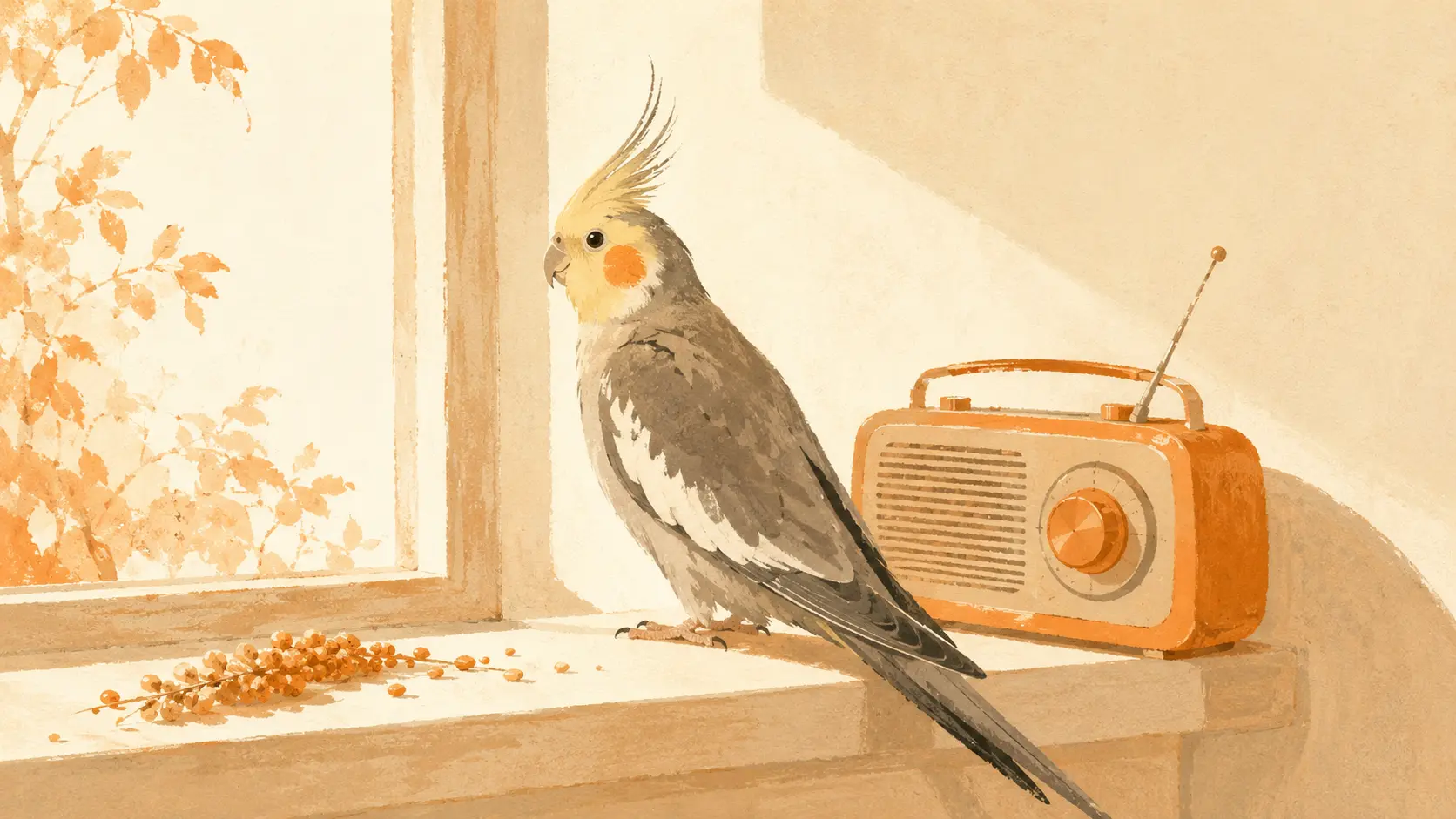
The fix is usually smaller than people expect. Softening the edge of the change tends to work better than adding stimulation on the other side of it — a radio on low through the weekend mornings, so that quiet stops being the baseline Monday interrupts. A timer plug is enough. Give it a fortnight before deciding whether it helped.
We mention it because pet boredom is rarely loud. It looks like a dog chewing the wrong thing, a cat over-grooming, a bird picking at its own feathers. The fix is rarely a new toy — usually it's a small adjustment to the rhythm of the room.