Rain doesn't change your dog. It changes your day.
From June to October, half the country reorganises its walks around a cloud that
turns up at the same hour every afternoon. And almost everything that breaks in
those months isn't medical — it's logistical.
The walk window moves
In the rainy season the pattern is usually pretty faithful: clear mornings, closed
afternoons. What in March was "I take him out at seven" becomes, in July, "I take
him out when I can".
Two things help more than anything else:
Move the long walk to the morning for these months, and leave the afternoon as
a short, flexible outing. It's easier to bring something forward than to
improvise.
Have a twenty-minute plan B for the days you simply can't go out: scent games
indoors, stairs, a run through commands they already know. A dog who spent no
energy isn't being difficult at ten at night.
Coming back: where everything dries
This is where the house becomes the problem, not the dog.
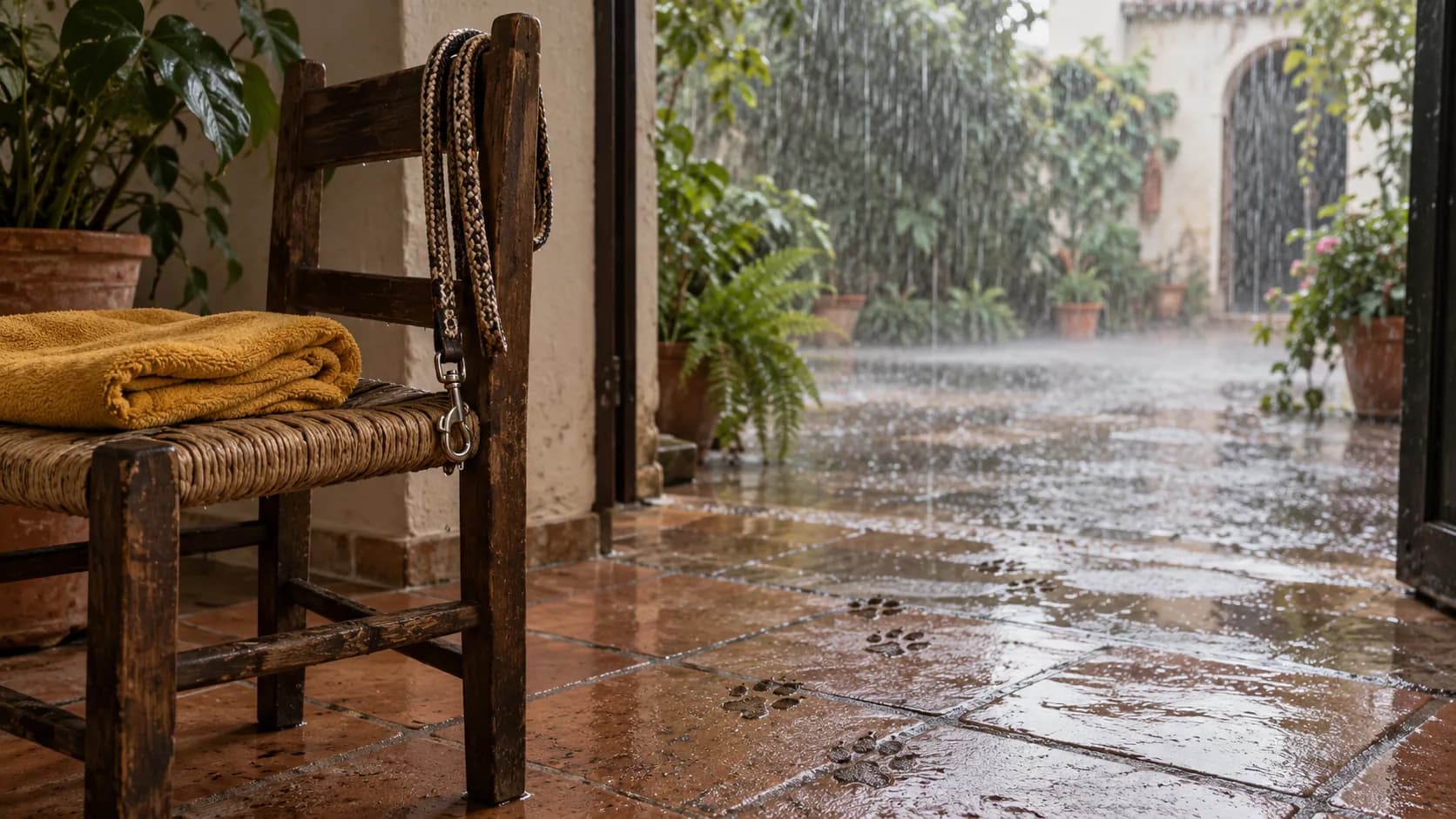
- Have a towel that's theirs, by the door, not in the bathroom. The one you
have to go and fetch is the one that doesn't get used.
- Dry them before they come in, starting with the paws. It's faster, and it
heads off the domestic argument of the rainy months.
- A wet lead needs its own hook. Put away damp in a drawer, in two weeks it
smells and stiffens. A hook in plain sight, by the door.
- Check their paws when you get back, without drama: wet streets collect
everything. If you see something that doesn't look right, that isn't ours to
solve — it's a photo and an appointment.
Mud has an upside
It sounds like a complaint, but a dog who comes home filthy is usually a dog who
had a good time.
Worth saying, because the rainy season is when most people shorten walks, and that
does show up at home. If the problem is the floor by the door, a mat solves it. If
the problem is the dog, it wasn't the problem.
What changes in the house
Noise. Thunder, hail, metal roofing. Some dogs ignore it and some don't. What
you can do is environmental: somewhere to tuck into that they already like,
curtains closed, a blanket, company if they seek it. What we won't do is tell you
what to give them — that's your vet's call, and if your dog has a genuinely bad
time in every storm, that's a conversation worth having with them.
Doors. With rain, doors open and close more, people come in with their hands
full, and doors get left ajar. It's one of the times of year most dogs get out —
and a good month to check their tag is still legible.
Standing water. Puddles, buckets, the patio. Nobody needs to explain why it's
worth emptying them; it's the same reason you do it for yourself.
What to write down these months
Not to diagnose anything. For context:
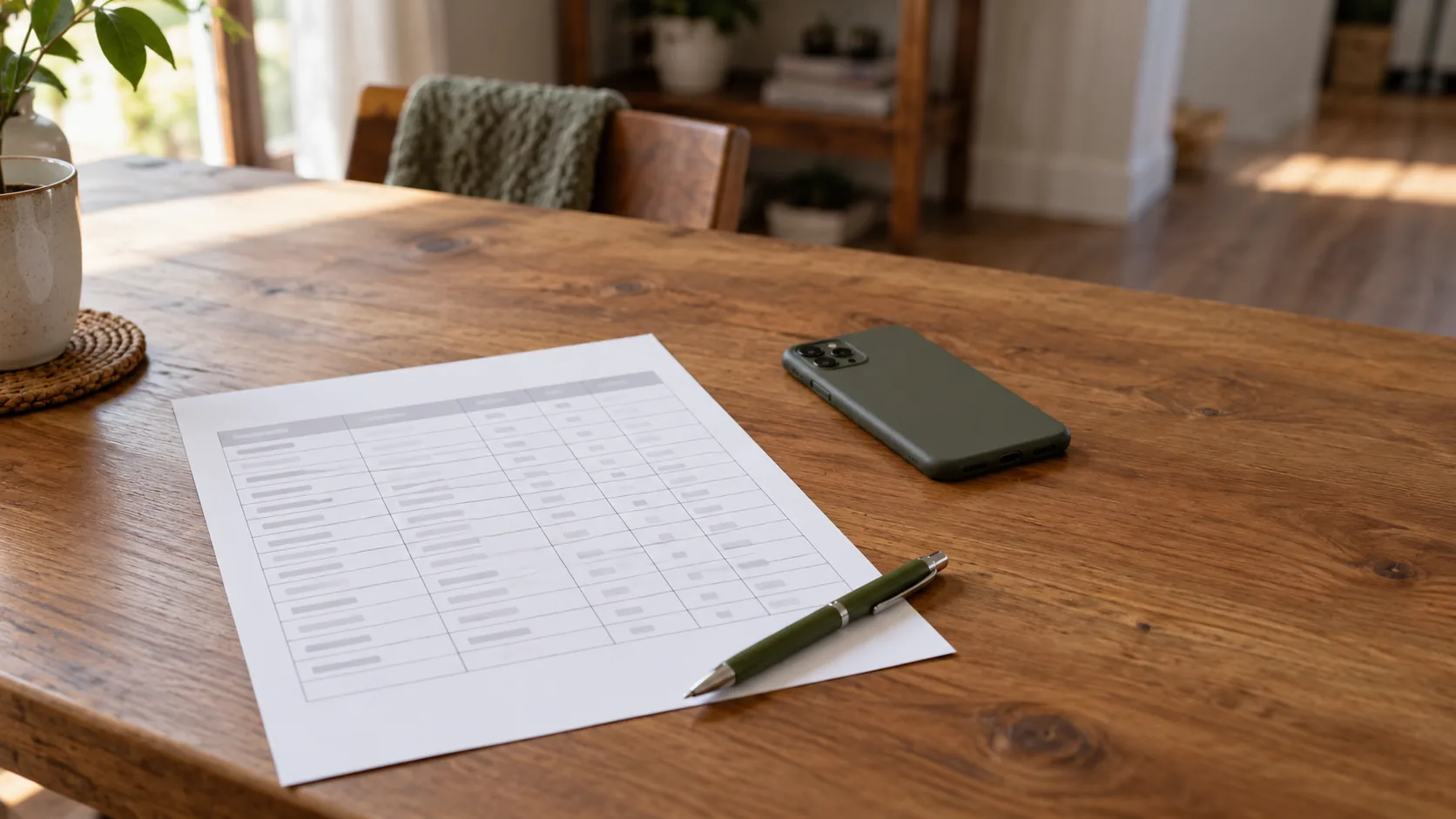
- If appetite, sleep or enthusiasm for going out changed, with the date.
Nothing more: the fact and the day.
- If there was a particularly bad day with a storm, note that too.
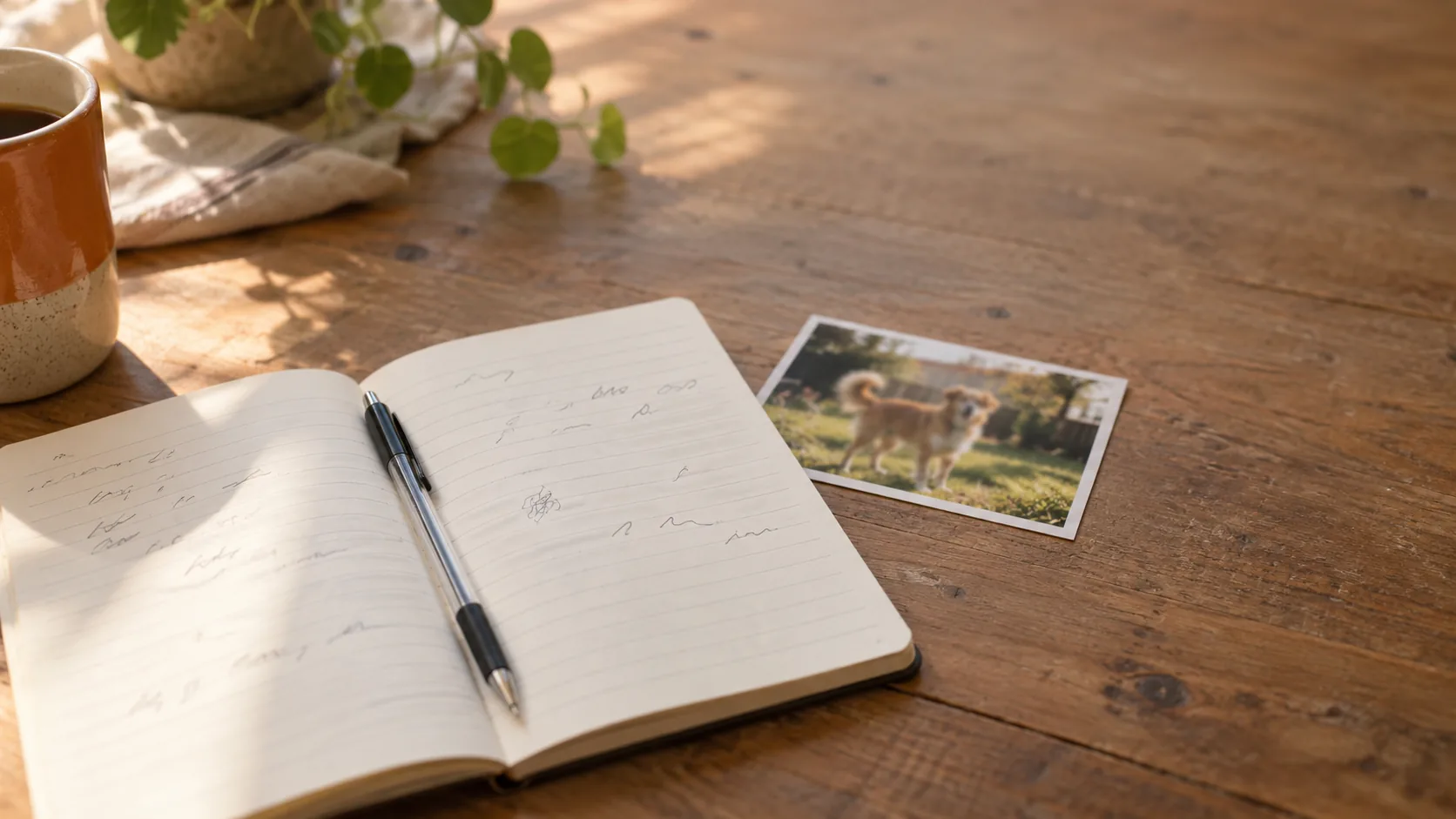
- Anything you noticed on paws, skin or ears — without interpreting it. "On
14 July I noticed X" is useful information. "I think he has Y" isn't.
Those notes aren't a diagnosis and don't pretend to be. They're what makes the
next appointment shorter and more useful, because you arrive with dates instead of
"he's been a bit odd lately". How to write things down so they still work later is
here.
Why we're building Maskotis
Seasons leave marks on a pet's routine and almost never get written down. A year
later nobody remembers whether last July was the same.
Today in Maskotis you can register your pet and keep their care events there, with
dates, so that context exists when someone needs it.
And today, very specifically: put a hook for the lead by the door.
Maskotis does not give medical recommendations and this article is not a
substitute for a veterinary consultation. Any change you notice in your pet is
assessed by the person who can examine them. Take them to the vet you trust, or to
the nearest clinic — they'll help you there.